Showing posts with label Comunidad Valenciana. Show all posts

Saturday, August 6, 2011

Elche, Alicante, Comunidad Valenciana

Elche is a city like no other in Spain. It’s a city known for its footwear industry (with apparently more than a thousand factories) and something even more incredible.
Palm Groves!


An extraordinary green oasis in the heart of the city - in Spain, in Europe!


Located in the autonomous community of Valencia, Elche is about 4.5hrs drive from Madrid. The reason Elche made it into the list of UNESCO World Heritage Site is obvious - the city itself is a sprawling orchard of thousands of 'tropical' palm trees! Also, the palms are known to exist since some 2,500 years ago, with irrigation techniques passed down from the time of Muslim influence in Spain. What's remarkable is that even with modernisation and urban expansion, the city of Elche has managed to preserve its heritage within its current landscape in a seemingly harmonious way.

Apart from the Palmeral de Elche, the historical old town of Elche contains a number of monuments that are well worth visiting.


Above: The Calaforra Tower, one of the last remains of the ancient city walls.


Above: One of the iconic landmarks of Elche is the Basilica of St. Mary with a bell tower and a gleaming blue dome. On the right is a replica sculpture of the Dama de Elche (Lady of Elche) that was discovered near the area in 1897. The original Princess Leia perhaps?


Above: The Altamira Palace and fortress built back in the 12th century. Today, it is part of Elche's Archaeology & History Museum. A fantastic view over the city can be enjoyed from the top of its walls and tower.


Above & Below:
The Huerta del Cura Palm Garden - one of Elche's most popular attractions - features an impressive collection of different palms from all over the world, as well as some giant cacti. The garden’s ‘celebrity status’ plant however, is the Imperial Palm. Its uniqueness lies in the fact that it was growing for several years as a single trunk plant, and only when it reached a height of 2 meters that it split into 7 arms, resembling a huge candelabra! This tree is more than 165 years old today.


Above: On the left is the building of the Town Hall. Next to the Town Hall stands the Calendura 'clock' Tower. Looking closely at the top of the tower you'll notice an automaton (named Miquel Calendura) responsible for chiming the hours.


Besides wanting to check out the amazing palm plantations in Elche, the other reason that I came here was for the beach. It's almost a summer tradition that I have to follow, to squeeze in a trip to the beach - ANY beach - because as you know, one does not exist in Madrid.

The nearest beaches to Madrid are the ones at Valencia along Costa Blanca. Although Elche is an inland city, it’s close enough to a handful of decent beaches like Arenals del Sol, El Carabassi, and also a coastal town called Santa Pola.


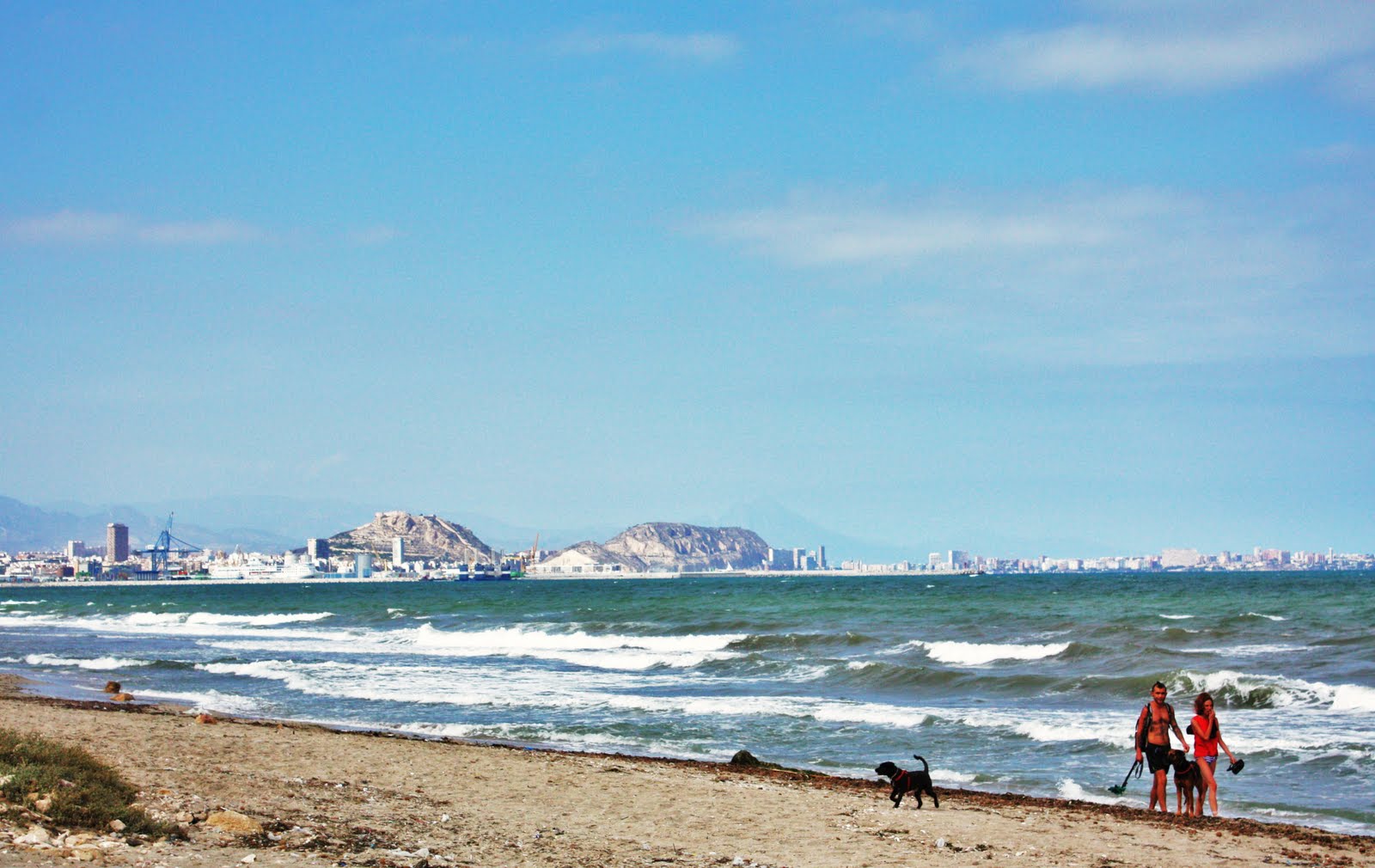


Well done, Elche. You've successfully got me (make) believing I’m far, far away in some tropical city, even if it’s just for a while...

Friday, July 16, 2010

Benidorm, Alicante, Comunidad Valenciana [Part I of IV]

'Beni-York', 'Touropolis', 'Package holidays'.

These are the made-up words commonly used to describe the coastal town of Benidorm and its ever growing number of match-stick skyscraper hotels, bikini clad holiday makers and crowded beaches.

Once a simple fishing village, the fate of Benidorm changed forever with the tide
(or shall I say with the 8 hour scooter ride of Mayor Pedro Zaragoza to Madrid)
in the late 1950s, when tourists were subsequently allowed to saunter around freely in their bikinis.

Today, Benidorm is better defined by its skyline than its twin crescent coastline.
As we drove along the highway, we knew we’ve hit Benidorm when we noticed several high rise buildings projecting skywards along the coast.

This touristy resort town has been particularly popular with British visitors for a long time, judging from the award winning comedy TV Series of the same name 'Benidorm' and the number of English language radio channels that can be received here.
Many pubs and restaurants bear the British flag and have names such as Piccadilly, Queen Vic or Robin Hood, making the northern neighbours feel more at home while enjoying the Iberian sun, sand and sea.


Above: The Levante beach, one of the two main beaches of Benidorm.


Above: Breaking the horizon is Benidorm's little 'Peacock Island' in the distance, an impressive focal point as seen here from the beach.


Above: Rows of asian-run shops line the streets of Benidorm, selling souvenirs and all sorts of knick knacks.

Leaving Benidorm and continuing further down the coastline, we arrived at the town of Alicante. Itching for a dip into the water, it was here where we decided to find a spot, lay out the beach mat and enjoy the rest of the day amidst the chatters and laughters of Spanish families.


Above: La Albufereta Beach in Alicante

In the next post, I'll tell you about my stay at Mar Menor - "the largest swimming pool in the world".

Life's a Beach...

After spending some time in Dénia, we decided to travel down almost the whole stretch of Costa Blanca (south eastern Spain) from Dénia to Cartagena.

In the following posts, I'll be sharing more of my sea-side holiday experience & where I got my sun-kissed skin :)


Wednesday, July 14, 2010

Bous a la Mar!

Bous a la Mar or ‘Bulls to the sea’ is yet another of Spain’s man vs. bull spectacle that’s unique to Valencia’s coastal region.

As opposed to the traditional Bull Fights and Bull Runs of San Fermin in Pamplona, Bous a la Mar is held next to the harbor as its name might suggest, and it’s relatively safer.
It is not gory blood sport but a fun event where the objective is for the participants to lure the bull into the water. More often than not though, it is the bull that is more successful at sending its young opponents diving!

In the town of Dénia, this event is typically held annually during the 2nd week of July in conjunction with the ‘Santísima Sangre’ festival.


Above: The entrance into the rectangular arena by the harbor, next to the port. Tickets cost 1 euro each and the show lasts for about an hour with at least 6 rounds per show.


Above: Spectators on the stand and participants in the arena waiting for the excitement to begin.


Above: One has to decide whether to run, duck, climb or jump into the water when the raging bull charges.


Above: In an unexpected move, the bull jumps onto the stage, scattering the crowd into various directions and causing all in the audience to gasp.


Above: Often, an experienced bull manages to send his row of opponents leaping off the edge of the harbour into the water, yet maintains its own grip on the slippery ground and halts just in time. Olé for the bull!


Above: The ground area underneath the stand where participants/spectators are protected by vertical bars with spaces broad enough for people to squeeze in & out, and narrow enough to keep the bull out.


Above: When a bull does end up in the water, it is promptly rescued by a small boat on standby and guided back to shore. As it can be seen here, one can also choose to witness this spectacle from the water!

Multiple shows run throughout the week and lots of other activities such as live concerts, foam parties, parades etc. will also be taking place, making this period a perfect time to visit.

Tuesday, June 29, 2010

Dénia (Costa Blanca), Comunidad Valenciana

For my recent weekend escapade, I decided to check out the beaches of the coastal port town of Dénia (4.5hrs drive from Madrid) located between Valencia and Alicante.


Truth be told, there are certainly other beaches in Spain that can easily surpass Dénia's in terms of quality & beauty. Yet, within its 20km coastline, there are lots of charming spots to beguile you.

The waterfront along the town center of Dénia is defined by the busy beaches of Les Marines, Punta del Raset, the Port and La Marineta Casiana. This stretch of beach is fairly sandy and popular for all sorts of beach activity. Whichever beach you choose to go to, you'll have the magnificent Mount Montgó (a natural park) in the background.


Above: The Les Marines beach.


Above: A panorama of the beach front with Mount Montgó behind.


Above: The beach at Punta del Raset.


Above: Some kite surfing action near the northern breakwater of Punta del Raset.


Above: A canoeing competition happening at the beach.


The center of the town is dominated by a small hill topped by a Castle with Muslim origins. Surrounding the hill, the town is made up of old districts filled with plazas, churches, restaurants and shops.


Above: The Castle of Dénia, a historical monument built on a hill in the heart of the city, overlooking the sea.


Above: The tunnel that cuts through the hill under the Castle which leads to Plaza del Consell. This was constructed in the late 1930s and apparently used as a bomb shelter during the Spanish Civil War.


Above & below
: Plaza del Consell.


Above: A giant paella in the making.


Above: A string of restaurants line the road of Bellavista, across from the maritime walk. Food is fantastic in Dénia and cheaper than in Madrid!


Above: The Port.


Above: The open air market operates daily during summer along Explanada Cervantes, running parallel to a line of alfreco bars and cafés.


Above: Plaza Convento.


Above: Calle Marqués de Campo, a street filled with shops, cafés and restaurants.

A little further down south of the coastline away from the busy beaches and maritime promenade is the calmer, undisturbed Les Rotes area. Les Rotes is within the protected zone of the 'Cape Antonio Marine Reserve' and diving is the only activity allowed here.


Above: Pulpo seco in the making. Headless octopuses hung out to dry like laundry, outside a restaurant at the Punta Negra part of Les Rotes.


Above: The Cape of Sant Antoni at the far end, with a 160m high vertical cliff. The Torre del Gerro (Tower of Gerro) is also visible here on top of the mountain. It was used as a watch tower for coastal defense against pirates' incursions.


Above: Some of the many luxurious houses perched on the slopes of the Montgó Mountain with superb views of the Mediterranean Sea.


Many may not agree with me, but I actually have an aesthetic appreciation of the rocky, rugged Arenetes area of Les Rotes beach, further south of Dénia. It is quiet, peaceful, and the water is crystal clear.


Above: Part of the sea bed now exposed. I can only imagine how beautiful it is under the sea as this area is known to have an assemblage of posidonia (underwater meadows!).


This fascinating coastline has several coves and hidden caves further down from Les Rotes which I have yet to explore. Something tells me I might just head back there again...


Above: El Pegoli restaurant located by the coastline of Les Rotes.
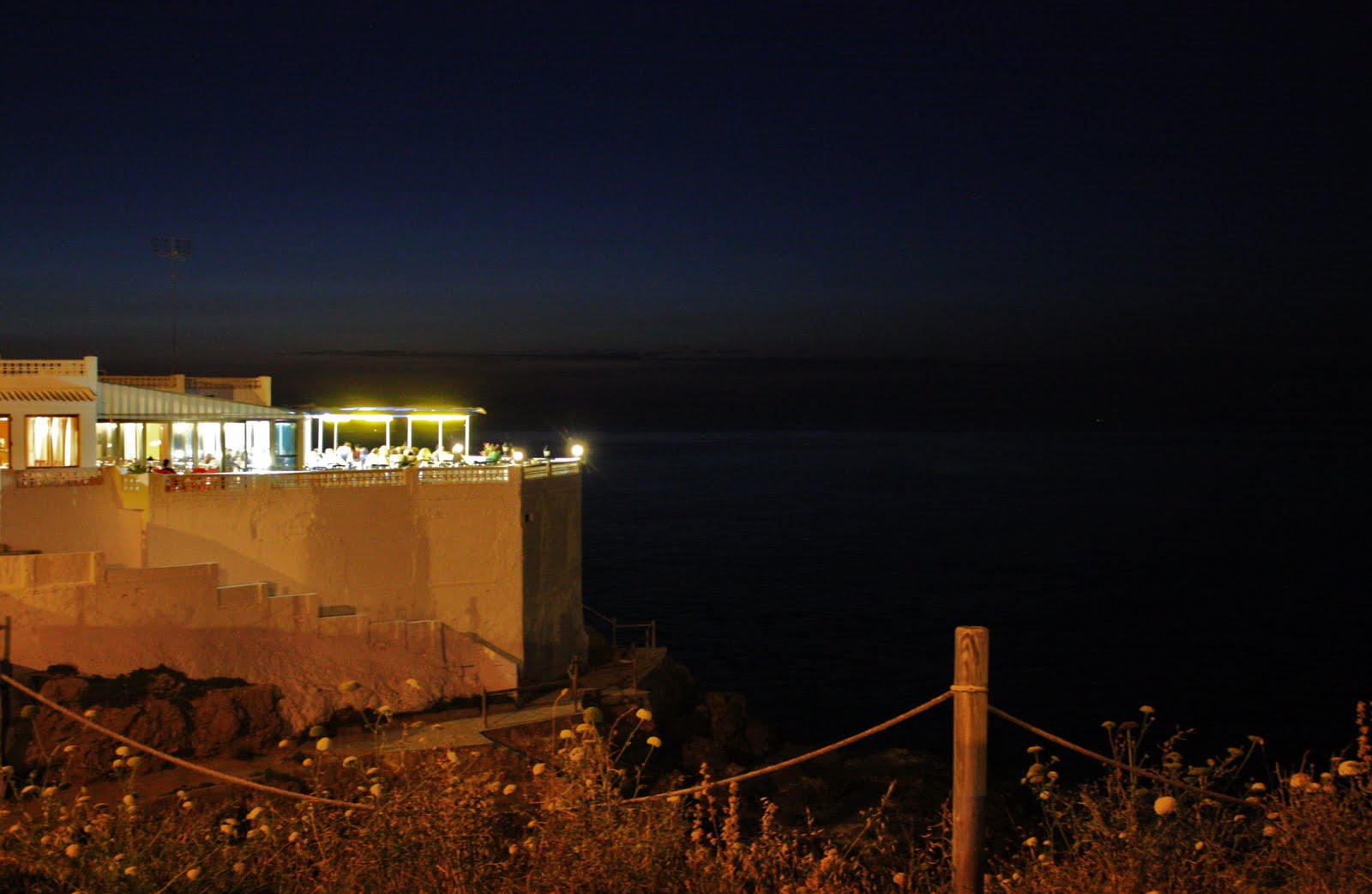


Above: Les Rotes Arenetes area by night.

Just when I thought I’ve seen them all – bull fights and bull runs, Dénia surprises with another wacky version of man vs. bull spectacle known as ‘Bous a la Mar’ or Bulls to the Sea.


A temporary secured arena is set up by the harbourfront, with spectators on one side and the sea on the other. A young bull is then released and the usual human participants will be the local teenage boys who'll come up with all sorts of antics in their attempt to draw the animal into the waters. Don't worry, the bull will be rescued. Phew!

This bizarre event happens typically in the 1st fortnight of July, in conjunction with the Fiesta of 'Our Lord's Holy Blood'. Go catch this intriguing 'National Tourist Interest' activity next month if you're curious!


For more information on Dénia, click here.
Related Posts with Thumbnails